Blog / Experiences
Daily life of Waplus Nara
~☆ ☆
☆ ☆~~Hello, this is Tea ceremony &Calligraphy shop Waplus Nara~~☆☆☆~
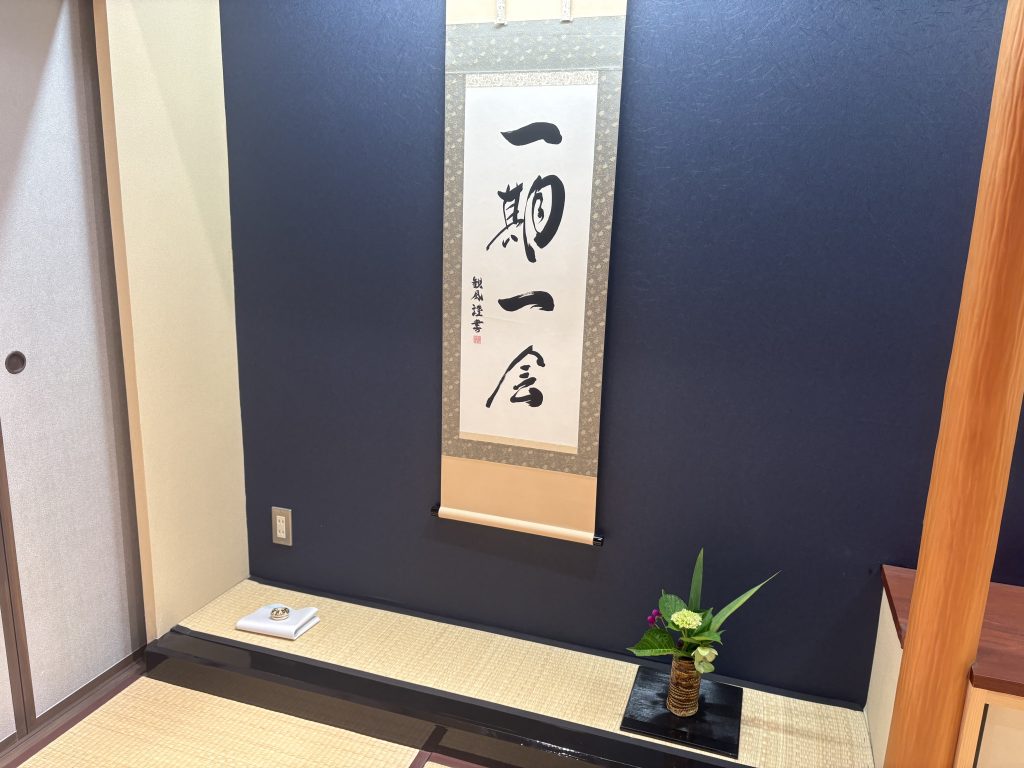
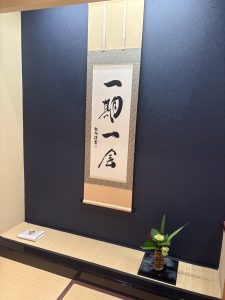
Recently, during a tea ceremony experience, some guests asked about the kōgō (incense container) and the kami-kamashiki (paper mat) displayed in the alcove, so I would like to give a simple explanation.
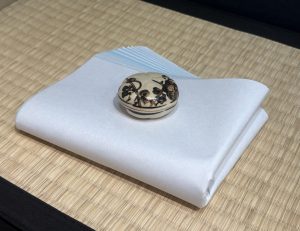 This is called a “Kōgō,” a small lidded container used for incense.
In the tea ceremony, incense is used to purify the atmosphere of the tea room and create a calm, peaceful environment for guests.
Offering a subtle fragrance is considered part of traditional Japanese hospitality.
In a formal tea gathering, there is usually a charcoal preparation ritual called “Sumitemae.”
During this procedure, charcoal is arranged to heat the water, and incense from the kōgō may be placed near the charcoal fire.
However, in tea ceremony experiences or simplified tea gatherings, the charcoal procedure is sometimes omitted for practical reasons or time limitations.
When that happens, the kōgō is displayed in the alcove (tokonoma) as a traditional sign meaning:
“Normally there would be a charcoal procedure, but today it is omitted.”
The white paper placed underneath the kōgō is called “Kami-kamashiki.”
It originally comes from a mat used for placing a hot kettle, but in the alcove it is used beneath the kōgō to show respect for the utensil and to indicate that it is being formally displayed.
Together, the kōgō and the paper beneath it are not simply decorations, but important elements that quietly express the spirit, etiquette, and hospitality of the Japanese tea ceremony.
At Tea Ceremony Shop Waplus Nara, we share the history of tea and how to enjoy matcha.
Sessions are held three times daily at 10:00 AM, 1:00 PM, and 3:00 PM. If you’re visiting Nara, please do stop by our shop!